Landscape design-build marketing should make the intended project clear. A homeowner looking for a complete outdoor space needs different information from someone seeking recurring lawn care. Describe the work you sell, the design process and the type of consultation you can offer before asking for the enquiry.
Use completed projects to explain how the pieces fit together. Patios, planting, lighting, kitchens and shade structures may be parts of one outdoor-living brief. The website should help someone understand that connected service without implying that every visitor needs the largest possible scope.
Separate design-build from the work you decline
Write an approved service statement with the team answering the phone. Name the project types accepted, any maintenance or repair exclusions, the actual territory and the first step in the process. Keep the same distinctions in ads, service pages and intake choices.
If a minimum scope or design fee applies, explain it in the appropriate place using the current approved terms. Avoid a free-design promise when the offer is conditional or the consultation does not include a finished design. The office should not have to correct the campaign's headline on every call.
Show how a project solves a household need
A useful portfolio story might explain how the family intended to use the space, which constraints shaped the layout and how the finished zones work together. A nighttime lighting view can demonstrate a different use of the same project rather than serve as another decorative gallery image.
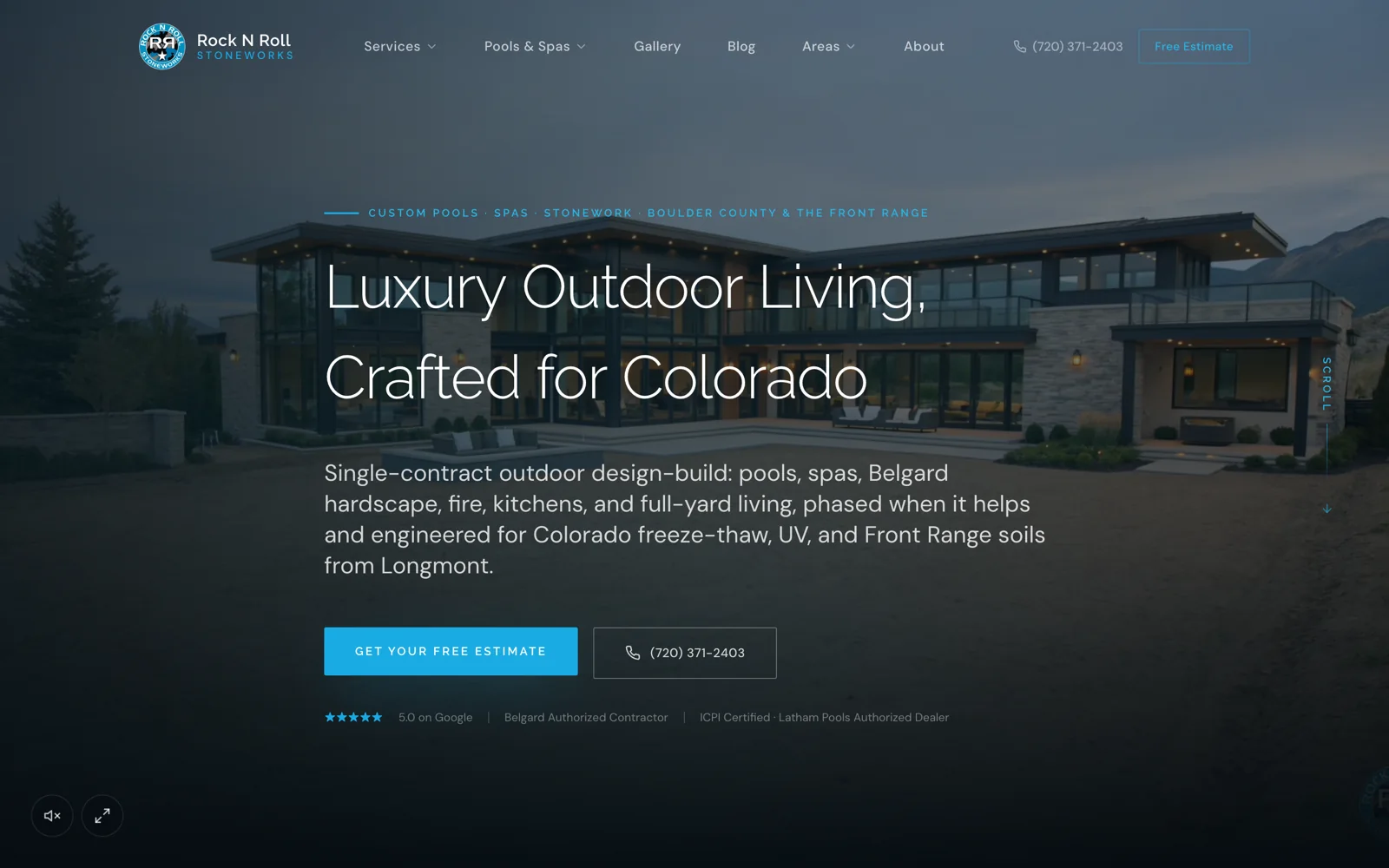
RK Preferred's website is a relevant design example because the rebuild connects landscape photography, 3D design and a guided project enquiry. Its case study shows the website work. It is not evidence of a promised lead or appointment result for another landscape business.
Answer the questions that prepare a design conversation
Build planning content around the questions your designers actually receive. Those may include phasing, access for equipment, intended evening use, material choices and the information needed before a site visit. Have the responsible specialist review technical claims instead of turning a generic article into construction advice.
Connect each guide to the service and a project that illustrates the decision. A homeowner reading about a phased backyard should be able to see a relevant example and understand what the initial conversation covers. Keep precise costs and build schedules tied to an approved scope rather than invented averages.
Make the first enquiry a useful project brief
Ask about the intended outdoor project, property location, planning stage and a usable contact method. Allow homeowners to explain how they want to use the space. Inspiration images can be optional; the absence of a polished brief should not prevent an appropriate first conversation.
Review enquiries by requested work, area fit and next-step completion. If maintenance calls dominate, revisit the service language and ad promise. If suitable design projects arrive but stall, investigate response and consultation expectations before increasing the advertising budget.
Common questions
Should a landscape design-build website target lawn-care enquiries?
- Only if the company offers that work. Make the accepted services and exclusions clear so homeowners and the office share the same expectations.
What should a design-build portfolio explain?
- Show the starting need, site constraints, design decisions and completed space. Use approved project evidence and connect the story to a relevant consultation.